
Key Points:
- ABA therapists use tailored strategies to develop communication skills, social participation, and expression.
- Techniques like verbal behavior, naturalistic teaching, and functional communication support meaningful progress.
- Parents exploring autism therapy learn how therapists and families reinforce communication development.
Parents often start searching online when communication becomes a daily struggle. Maybe their child uses only a few words, relies on gestures, or gets frustrated when others don’t understand what they want. Some children echo phrases without using them meaningfully. Others avoid language altogether. These moments can leave parents feeling lost and unsure what steps to take next.
ABA therapy offers a structured and supportive way to help children develop stronger communication skills. Whether a child is learning their first words, expanding vocabulary, or becoming more confident in social interactions, ABA therapists know how to break communication into teachable steps that feel achievable. This article explains how ABA therapists help kids communicate better, which methods they use, why these strategies work, and how families can reinforce progress in everyday routines.
Why Communication Can Be Challenging for Kids With Autism
Communication challenges look different for every child. Some kids may speak but have difficulty using language meaningfully. Others may rely heavily on gestures or sounds. Many children have trouble understanding social cues, making conversation even harder.
These struggles can lead to frustration, behaviors that appear challenging, and moments where parents feel unsure how to help. This is why families often search for autism speech therapy or ABA therapy near me. They want clarity, guidance, and a plan that leads to real improvement.
ABA therapy supports communication by focusing on how language develops, what motivates a child to communicate, and how to turn daily moments into learning opportunities.
Understanding How ABA Therapists Approach Communication
ABA therapists break communication down into skills that build on one another. They look at:
• How the child currently expresses wants and needs
• What motivates them to communicate
• How they respond to instructions or social interactions
• Whether they understand spoken language
• How they use gestures, sounds, or words
The goal is to teach communication in ways that feel meaningful to the child. Instead of forcing words, therapists create situations where the child wants to communicate and has the tools to do it successfully.
This is why many parents seeking ABA therapy for kids notice improvements not just in speech but also in behavior. When kids can communicate better, frustration decreases and cooperation increases.
Communication Skills in ABA: How Therapists Teach Them
ABA therapy includes many strategies to support functional communication. These strategies can help children who are non-speaking, minimally verbal, or verbally skilled but struggling with social language.
Teaching Requesting
Requesting is one of the first communication skills ABA therapists teach. Kids learn to ask for items, activities, help, or attention. This reduces frustration and gives them a powerful tool for interacting with others.
Working on Labeling
Labeling helps children identify objects, people, actions, and emotions. This skill increases vocabulary and helps kids make sense of their environment.
Building Conversation Skills
Therapists work on skills like greeting others, answering questions, asking questions, and taking turns. These skills help kids participate more fully in home, school, and community settings.
Strengthening Understanding
ABA therapy also focuses on receptive language, which includes following instructions, identifying items, and understanding daily cues.
These foundational communication skills in ABA allow children to express themselves more confidently and connect better with the people around them.
Using Verbal Behavior ABA to Build Language
Verbal behavior ABA is a widely used approach within communication-focused therapy. It breaks communication into types of language functions rather than just words.
Therapists teach:
• Mands: Asking for what they want
• Tacts: Labeling objects or experiences
• Echoics: Imitating sounds or words
• Intraverbals: Back-and-forth language
• Listener behavior: Understanding and responding
This framework helps kids learn why and how to use language in different situations. For many families seeking autism speech therapy, verbal behavior ABA becomes an important part of meaningful progress.
Naturalistic Teaching: Helping Communication Happen in Real Life
Children learn best when communication happens during activities they enjoy. Naturalistic ABA therapy uses moments throughout the day to teach language. This approach helps kids:
• Ask for preferred items
• Make choices
• Respond to questions
• Interact socially
• Label things they naturally encounter
For example, if a child loves bubbles, the therapist turns that into a language opportunity. The child learns to request “bubbles,” say “help,” or label “big bubble.”
These real-life opportunities help language feel functional and rewarding.
Functional Communication Training: Reducing Frustration
Some children communicate through behaviors like crying, hitting, or throwing items. Functional communication training (FCT) teaches a clear, simple replacement behavior that meets the same need. For example:
• Instead of screaming, the child learns “help”
• Instead of hitting, the child learns “my turn”
• Instead of throwing toys, the child learns “all done”
Research published in the Journal of Applied Behavior Analysis shows that FCT is highly effective in reducing challenging behaviors while improving communication.
This approach empowers kids while helping families experience calmer, more predictable days.
How ABA and Autism Speech Therapy Work Together
Many families wonder whether they should choose ABA therapy or autism speech therapy. In many cases, the two complement each other. ABA therapists focus on how and why communication happens. Speech therapists focus on articulation, sound production, and language structure.
When both providers collaborate, children often make faster progress. ABA helps with motivation and functional use of skills. Speech helps with clarity, vocabulary building, and language expansion.
For families searching for ABA therapist near me or autism speech therapy near me, knowing how these roles work together can help guide the best choices for their child’s needs.
Supporting Nonverbal and Minimally Verbal Children
Some children communicate primarily through gestures or sounds. ABA therapy helps these children learn ways to express themselves more clearly. Therapists may use:
• Picture Exchange Communication Systems (PECS)
• Sign language
• Speech-generating devices
• Choice boards
• Basic vocal imitation exercises
These tools allow kids to communicate before they master spoken language. AAC does not stop children from talking; it often increases speech development over time.
ABA therapy for kids integrates AAC into routines so children feel empowered to communicate from the very beginning.
The Role of Motivation in Communication
A core principle in ABA therapy is that children learn best when motivated. Therapists identify what excites the child and use those items or activities to teach communication.
Motivation might come from:
• Favorite toys
• Snack items
• Movement activities
• Social games
• Sensory experiences
This is why ABA therapy near me searches often lead parents to programs that prioritize natural reinforcement rather than forced participation. When communication becomes rewarding, children use it more often.
Why Imitation Matters in Speech Development
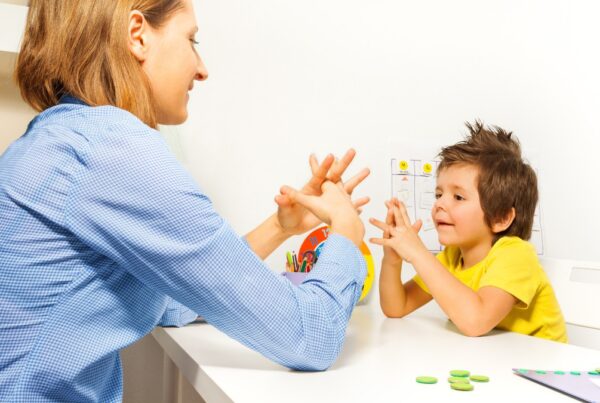
Imitation is a key early skill in communication development. ABA therapists teach children to imitate sounds, gestures, words, and play actions. Imitation builds the foundation for conversation skills and spontaneous speech.
Therapy sessions may include vocal imitation games, sound practice, or copying simple actions like clapping or waving. These steps help children learn to engage more deeply with the people around them.
How ABA Therapy Helps Kids Build Social Communication
Communication isn’t only about words. ABA therapists help kids understand and practice social language, including:
• Making eye contact
• Using appropriate tone
• Understanding personal space
• Responding to greetings
• Noticing others’ emotions
• Engaging in group activities
These skills are especially helpful during school readiness preparation.
For families searching for ABA therapy in Maryland or ABA Maryland clinics, social communication goals are often a major focus of early intervention programs.
How Parents Can Support Communication at Home
Parents are essential partners in communication development. ABA therapists teach caregivers practical strategies they can use daily, such as:
• Modeling simple language
• Waiting for the child to attempt communication
• Giving controlled choices
• Commenting during play
• Reinforcing attempts to communicate
Parent involvement helps children generalize skills outside therapy sessions.
Signs That Communication Skills Are Improving
Parents often begin noticing changes such as:
• More frequent attempts to communicate
• Fewer frustration-based behaviors
• Increased eye contact
• More spontaneous words or gestures
• Longer engagement in activities
These small steps build toward major communication milestones over time.
A Brighter Future Through Skillful Support
ABA therapy helps children build communication step by step, using structured teaching, natural interactions, and family involvement. Kids learn how to express themselves, understand others, and connect more meaningfully with the world around them. For families seeking guidance, ABA therapy provides a pathway toward confidence, clarity, and steady communication growth.
Crown ABA provides ABA therapy in Maryland designed to help children build meaningful communication skills through personalized, evidence-based programs. If you are searching for autism-focused support, our ABA therapy for kids offers structured guidance tailored to your child’s strengths. Through our ABA therapy services at Crown ABA, families receive compassionate care, consistent communication, and clear strategies to support progress at home and in daily routines. Contact us for more information today!